Why We Turn Away…

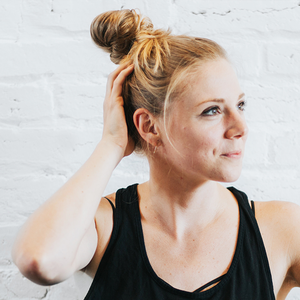
Photo by Natalia Blauth via Unsplash.
Last weekend, we launched the very first class of The School for Humaning Well—and it was something truly special!
What I witnessed over those few days was depth, courage, and a real willingness to slow down and meet experience as it is. People didn't rush to fix themselves. They stayed. They listened. They leaned in—even when what was arising felt unfamiliar or tender.
And as the weekend unfolded, something became very clear to me—something I wanted to speak to here.
The innocence of our desire to change an experience or feeling we don't like.
So much of our mental energy is spent thinking about how to fix, heal, get rid of, or improve something.
An emotion.
A pattern.
A symptom.
A state we don't want to be in.
The mind, in its brilliance, immediately looks for a reason.
Why do I feel this way?
What's causing this?
What am I doing wrong?
And once it lands on an answer, it usually comes to the same conclusion:
This needs to change so that I can feel better.
This pattern didn't form randomly.
As children, many of us were faced—again and again—with moments where being fully ourselves didn't feel safe. There's a teaching from Gabor Maté that names this clearly: early on, we had to choose between authenticity and attachment.
In Gabor Maté’s video, he speaks directly about addiction. And while he often names substances, the deeper invitation is to widen how we understand the word. Addiction isn’t only about what we consume—it’s about what we turn to when we don’t feel safe inside our experience.
For many of us, that “something” has been the mind.
In those early moments, we were faced with a choice: to be true to what we felt—or stay safe, loved, and connected to the people we depended on.
For survival, our systems chose safety every time.
That choice wasn't conscious. It was our innate health taking care of us.
In those moments—when anger couldn't be expressed, when sadness felt like too much, when fear had nowhere to go—we learned something very quickly about what was ok and what wasn't.
And when sensation felt overwhelming, the mind stepped in to help.
The mind isn't the enemy. Far from it.
Its design is beautiful. It thinks, interprets, labels, compares, predicts the future, and builds a version of “you” that knows how to navigate the world.
At its best, the mind is meant to be a servant to intuition. To bring ideas and inspiration into form.
But we live in a culture that trained it to lead instead.
We've relied on intellect for almost everything—and without realizing it, we've strengthened our disconnection from another kind of wisdom: the wisdom of the body. Sensation. Energy. Feeling. The quiet knowing that doesn't arrive through thought.
So when experiences we don't like come online—despair, disgust, anger, impatience, shame, resentment, fear—we do exactly what we've been trained to do.
We go to the mind for counsel.
We think about it.
We analyze it.
We problem-solve it.
We form a plan to make it go away.
And most of us are very good at this.
We've developed a master's degree in turning away from experiences our system perceives as dangerous. Not necessarily physical danger, but emotional danger—rejection, conflict, disappointment, unworthiness.
When something inside of us felt overwhelming or unsafe, we learned to move away from it—to override it, manage it, or think our way out of it.
Again—this wasn't a mistake.
It was a survival strategy.
The challenge is that over time, this strategy shapes our lives in subtle and not so subtle ways.
The mind believes we can't handle certain experiences—breakups, failure, success, grief, pain, falling behind—so it works tirelessly to protect us from them.
And in doing so, we often end up living lives that are familiar and safe… but smaller. More controlled. Less alive.
What we're beginning to explore in this work is a different orientation.
Not how to feel calm all the time.
Not how to get rid of discomfort.
But how to expand our capacity to feel safe inside our experience—whatever it may be.
Because the nervous system doesn't need to be solved. It's designed to communicate. Through sensation. Through emotion. Through energy. Through the experiences that get our attention.
One of the things that's become very clear to me—especially over this past year—is this:
The quality of our thinking, our emotions, and our moment-to-moment experience is shaped by the state of our nervous system.
Most people don't fully understand this. I know I didn't.
The body is always talking. It's constantly reading minuscule signals—far below our conscious awareness—and sending that information up to the brain. I like to say there's a kind of back-channel communication happening between the body and the mind all day long.
When the nervous system sends signals of threat—the mind receives that information and immediately gets to work.
It looks out into the world and finds a reason for the experience.
This is why I feel this way.
This is what needs to change.
And then the familiar cycle begins again: trying to fix something “out there” so we can feel better “in here.”
This is unconscious and automatic.
But what if there's no 'reason' for the experience? What if the sensations and energy just want to be felt—to move and get released from our system?
Could it be that simple?
Yes. And when we stop trying to eliminate what's arising in real time—and instead turn toward it with presence—something fundamental begins to shift.
Not because the experience disappears.
But because we're no longer resisting it.
As we retrain ourselves to reconnect to our hearts and bodies, we return to our wholeness. From here, life naturally becomes more alive—and we're more free to play, ‘risk’, shine our light, follow flow, and enjoy this unique embodiment.
This is a lot to take in.
In many ways it's the opposite of what we've learned to do.
And, undoing it is a process.
I'll share more about my personal experience with this to help ground it in the next newsletter. For now, I wanted to lay out the idea and let it settle into your system.
The next time something uncomfortable arises, see if you can catch the moment your mind says, “I don't like this. This should be different.”
You don't have to change it.
You don't have to do anything with it.
Just notice.
Recognize what's here—in your heart, body, breath.
Then see what opens from there.
With loving,
Amber
PS: Last call for applications for the gifted 1:1 Retreat Coaching Package. If you're curious, click here to learn more and apply.
FOR THOSE WHO WANT MORE
Join The Secret to Humaning Well® Newsletter
A twice-monthly letter, plus the Starter Guide as your welcome gift. This is a free space for reflections, resources, events, and more, all devoted to living more free.
Enter your information below.